In this context, fashion influencers can bring a collection into everyday life, beyond traditional catalogue photography. Their content takes garments from a catalogue image into real situations: a working day, a night out, a trip, an event or a daily routine.
But an effective collaboration involves much more than sending products to creators with large followings. To achieve results, brands need to select their partners carefully, set specific objectives, develop a creative concept and measure the impact of each activation.
Define Your Objectives Before Looking for Influencers
The first step in planning a collaboration is to establish what result you expect to achieve. The objective will determine the choice of creators, the content formats, the budget and the evaluation metrics.
A brand might be looking for recognition during a launch, visibility for a new collection, traffic to its online shop, content creation, sales, footfall to a physical store or positioning within a specific segment.
When the aim is to increase awareness, it may make sense to work with several creators and prioritise coverage. If the aim is conversion, more attention will need to be paid to audience fit, the creator’s ability to recommend products and the tracking mechanisms in place.
Different objectives can also be combined, but it is important to set priorities. Asking a single post to generate mass reach, engagement, premium content and immediate sales usually leads to unrealistic expectations. Even the best look needs to know which catwalk it is heading for.
Choose Influencers Who Align with Your Brand
Selection should not start with follower numbers, but with the compatibility between the creator and the company’s identity. Visual style, values, tone of voice and previous collaborations all offer clues about how the product could fit into their content.
A sustainable fashion brand, for example, should assess whether the influencer regularly talks about responsible consumption and whether their behaviour is consistent with that positioning. A sportswear company will need creators whose activity or lifestyle allows the garments to be shown in a credible setting.
It is also important to look at how they present other collaborations. If all their sponsored posts look identical, or if they promote competing brands within a very short period, the recommendation may lose its strength.
The collaboration should make sense to the audience. The aim is not for the influencer to dress up as the brand, but to find an authentic way of bringing it into their own world.
Choosing Between Macro-, Micro- and Nano-Influencers
The right size of influencer depends on the objectives and the available budget. Creators with greater reach can help build awareness quickly, while smaller creators tend to work with more specific communities.
Macro-influencers can present a collection to a wide audience and may be useful for launches, seasonal campaigns or positioning activations. However, they require a larger investment and their audiences tend to be more diverse.
Micro-influencers can be particularly interesting for brands that need to reach specific niches. Their content usually maintains a close relationship with particular interests, such as streetwear, sportswear, accessible luxury or sustainable consumption.
Nano-influencers, meanwhile, have small communities but can offer closeness and local relevance. A strategy spread across several small creators can generate varied content and a presence within different segments.
No single tier is universally superior. What matters is building a combination that is coherent with the campaign objective.
Develop a Creative Concept for the Collaboration
Sending a garment and asking for a post leaves much of the campaign’s potential to chance. To achieve consistency and differentiation, you need to develop a concept that connects the product with a situation, an emotion or a relevant conversation.
A collection can be presented through different ways of styling the same garment, a style challenge, a transformation, a personal selection by the creator or a story related to the design process.
The concept should allow each influencer to bring their own identity without losing the core message. If every post is exactly the same, the campaign can become repetitive. If every creator communicates something completely different, the brand risks disappearing behind the content.
The best creative idea works like a thread: it holds the posts together while letting them breathe.
Prepare a Clear but Flexible Brief
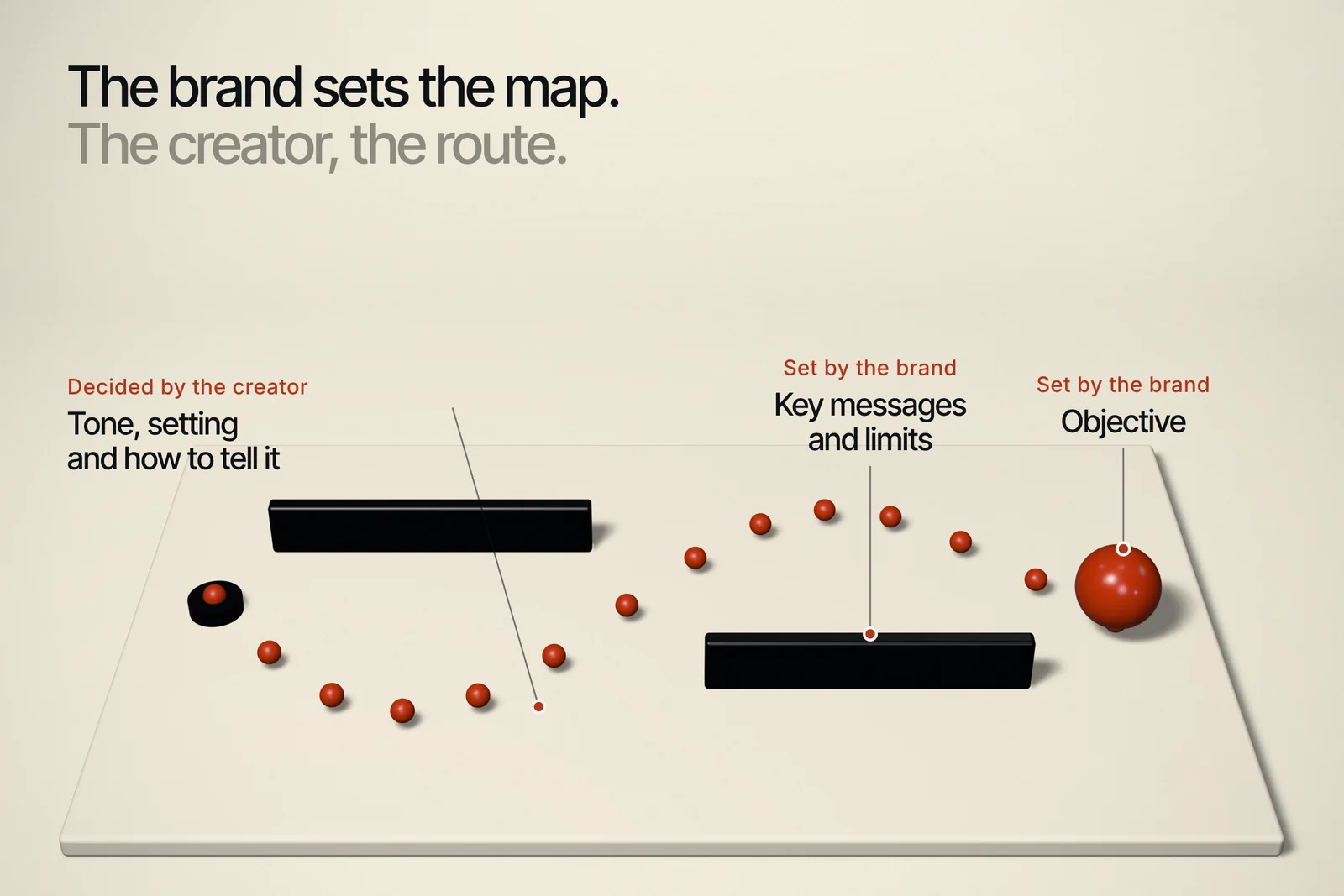
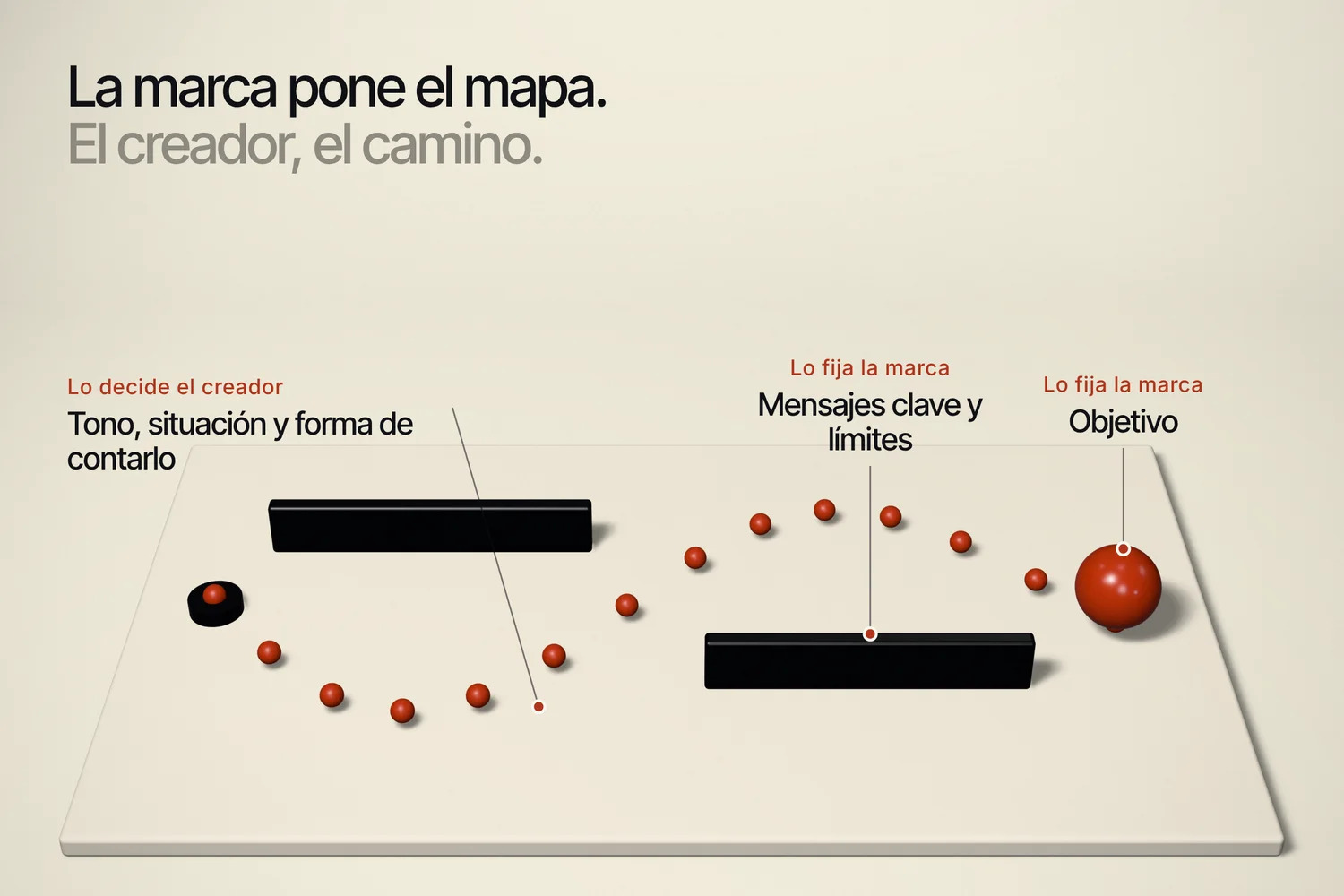
The brief should give the influencer the information they need to understand the campaign. It can include the objective, the collection’s characteristics, the main benefits, the audience, the dates, the formats, the mentions, the mandatory messages and any restrictions.
In fashion, it is also worth detailing aspects related to styling, garment visibility, colours, visual references and the situations in which the product is expected to be shown.
However, the document should not become a rigid script. Creators know their language, their community and the formats that work best on their profiles. Giving them room to interpret the campaign can produce more natural content.
An effective brief sets boundaries and priorities, but it does not dictate every gesture. The brand provides the map; the influencer decides how to walk it.
Choose the Right Content Formats
Each format can play a different role within the campaign. Short-form videos can show movement, outfit changes, details and styling processes. Photographs can highlight the aesthetic of a collection and enjoy a longer lifespan on the profile.
Stories are useful for adding links, answering questions, sharing first impressions or reminding followers about a promotion. Live streams can be used to present launches, explain features and talk to the audience in real time.
More in-depth content can also be created, such as YouTube videos, style guides, reviews or posts in which the influencer shows how they wear the garments at different times of the day.
The choice should respond to audience behaviour and the commercial objective. There is no need to use every available format. Sometimes a simple, well-executed idea can deliver better results than a campaign packed with content that has no clear purpose.
Turn Influencer Content into Paid Advertising
When a post performs well organically, the brand can amplify it through advertising. This approach preserves the creator’s identity while taking advantage of the platforms’ targeting and optimisation capabilities.
Advertising campaigns using influencer content can target new audiences, visitors to the online shop or people who have previously interacted with the brand. They also make it possible to test different creators and messages to identify which generate the strongest response.
The relevant permissions must be agreed before the promotion is activated. It is also worth adapting the content to the advertising objective, with a clear opening, an understandable proposition and a call to action.
The most visually polished content is not always the content that converts best. In fashion, a simple demonstration or a specific recommendation can outperform a flawless production that does not explain why the garment deserves a place in the wardrobe.
Plan Your Fashion Influencer Collaborations with FlowFlamingo
An effective collaboration with fashion influencers begins long before the content is published. You need to define the campaign objectives, find creators who genuinely connect with the brand’s audience, develop a creative proposal, coordinate each activation and analyse the results.
At FlowFlamingo, we plan and manage influencer marketing campaigns from end to end. We select the most suitable influencers, organise the collaborations, oversee content creation and measure performance to identify which creators, formats and messages deliver the best results.
If you want to work with fashion influencers and turn every collaboration into a strategic activation for your brand, contact FlowFlamingo and start planning your next campaign.