
Large-scale organisations need marketing approaches capable of adapting to multiple audiences, channels and markets, while maintaining consistency, efficiency and results measurement. From digital positioning to building reputation and trust, every action must respond to clear planning and consistent execution.
In this article, we explore the main marketing strategies for large businesses, why they are key to sustained growth and how to integrate them into a plan that generates real impact, today and in the long term.
Why Drive a Marketing Strategy for Large Businesses?
In large businesses, marketing stops being a one-off action and becomes a system. As organisations grow, so do their challenges: multiple audiences, diverse markets, longer decision cycles and increasingly sophisticated competition. In this scenario, having a solid marketing strategy is not optional; it is structural.
A well-defined strategy makes it possible to align every effort, from branding, communication and performance to content and channels, under a single vision. Without this coherence, marketing fragments into isolated actions that consume budget without generating real or sustainable impact. For large businesses, where every decision involves significant resources, a lack of strategy translates into inefficiency and lost opportunities.
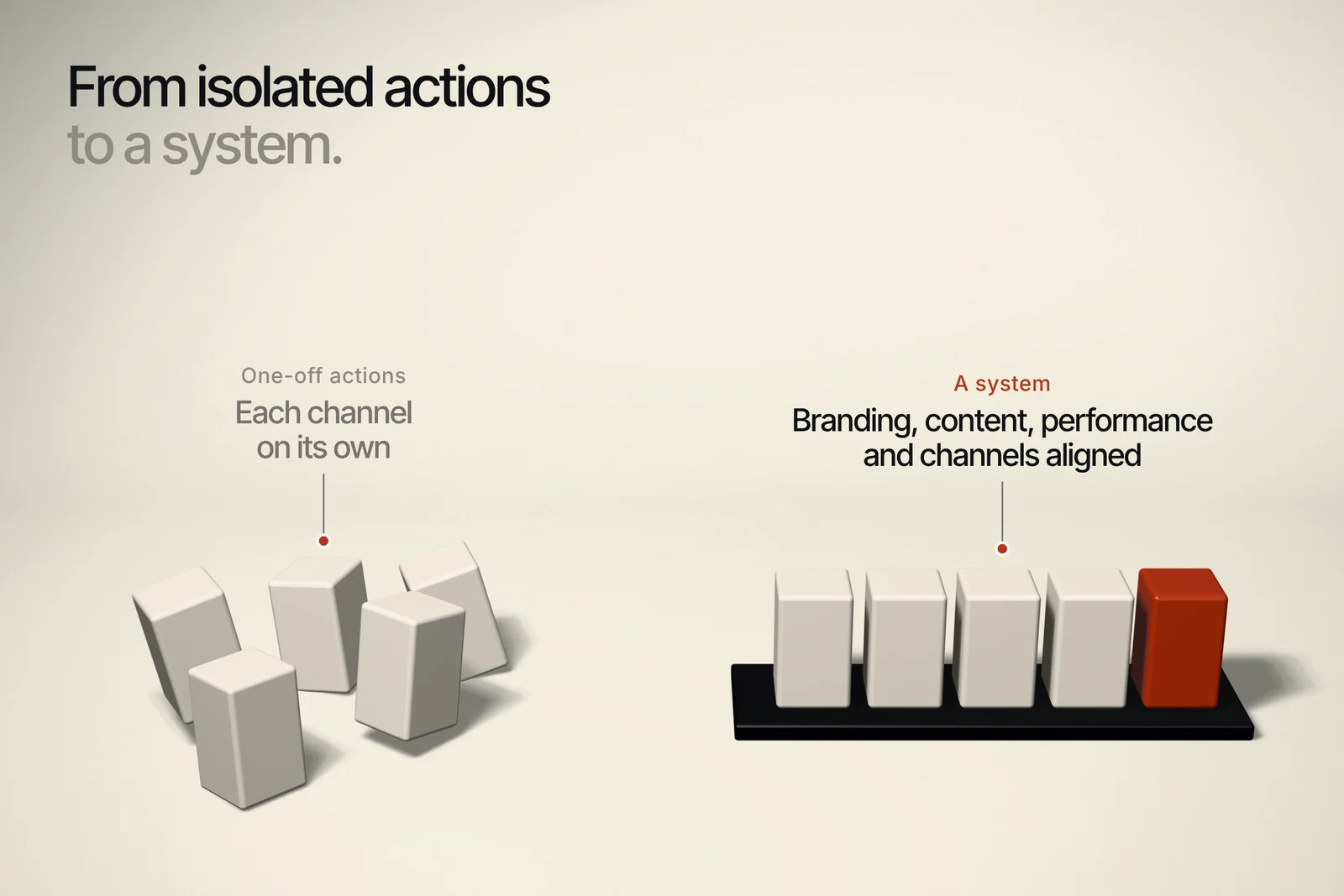
A clear marketing strategy also facilitates data-driven decision-making, the prioritisation of objectives and adaptation to market changes. In complex, highly competitive environments, the brands that lead are not the ones that communicate the most, but the ones that plan, execute and optimise best. Driving a marketing strategy is, ultimately, an investment in consistency, growth and long-term competitive advantage.
Key Marketing Strategies
Large businesses operate in complex environments, with multiple audiences, markets and touchpoints. That is why their marketing strategies must be scalable, consistent and sustained over time. Below, we set out the main strategies that drive leading brands today, and why they are key within an integrated plan.
Search Engine Optimisation (SEO)
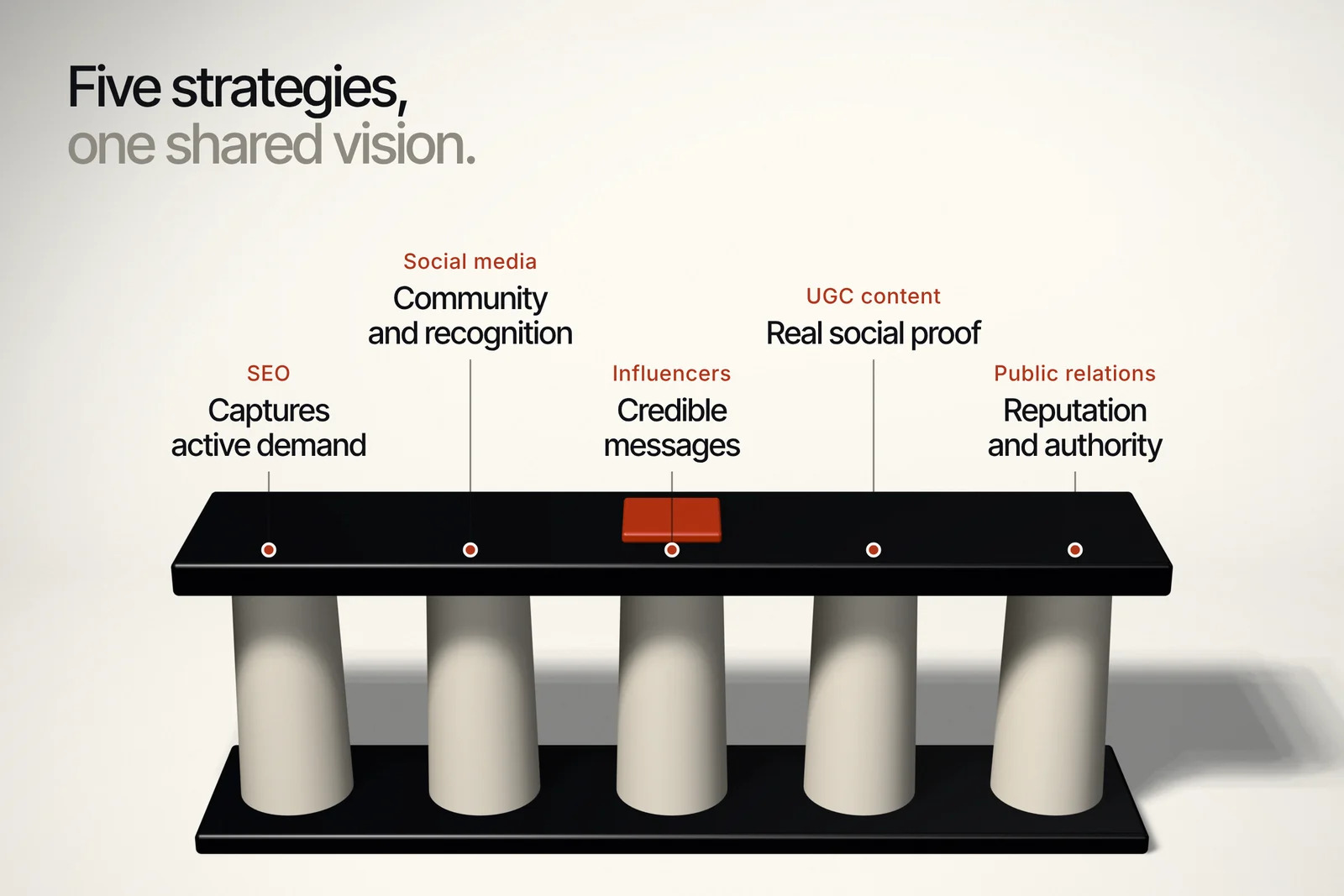
SEO is one of the most robust strategies for large businesses, as it makes it possible to capture active demand consistently and build long-term digital authority. Through a well-defined SEO strategy, combining content, technical optimisation and online reputation, brands can occupy key positions in search engines and remain visible against direct competitors.
For large companies, SEO not only generates qualified traffic, but also reinforces brand positioning, improves the user experience and reduces exclusive dependence on paid advertising.
Social Media Content
Social media is a strategic channel for building community, generating brand recognition and maintaining an active presence in the digital conversation. For large businesses, platforms such as TikTok or LinkedIn play a key role depending on the type of audience: TikTok amplifies reach and humanises the brand, while LinkedIn is ideal for corporate positioning, employer branding and B2B communication.
A well-executed content strategy makes it possible to connect with different audiences, reinforce brand values and increase visibility both organically and through paid media.
Influencer Marketing
Influencer marketing allows large businesses to scale messages through voices that already have credibility and a connection with their communities. Beyond reach, this strategy brings legitimacy and closeness, two fundamental assets in increasingly saturated markets.
When working with influencers aligned with the brand’s values and objectives, the message is perceived as more authentic and relevant. For large companies, this strategy is key to launching products, reinforcing positioning or accessing new market niches.
UGC (User-Generated Content)
User-generated content has become one of the most effective strategies for influencing purchase decisions and strengthening trust. Today, what others say about a brand converts better than what the brand communicates about itself.
For large businesses, driving UGC means harnessing the voice of customers, consumers and communities to build real social proof. Integrated correctly into digital channels, UGC humanises the brand, reduces friction and reinforces credibility at every point of the user journey.
Public Relations
Public relations remains a fundamental pillar for large businesses seeking to build reputation, authority and institutional presence. Through media appearances, crisis management, thought leadership and strategic communication, PR makes it possible to influence public perception of the brand beyond owned channels.
In a context where trust is key, a solid public relations strategy reinforces corporate positioning, improves visibility and helps consolidate the brand over the long term.