
Integrating influencer marketing into an ecommerce business is not about collaborating with content creators on a one-off basis, but about aligning this discipline with commercial objectives, the conversion funnel and the brand strategy. Below, we explain how to do it in a structured, scalable, results-oriented way.
Define Clear, Measurable Objectives
Before activating any collaboration, it is essential to determine what you expect to achieve with influencer marketing. In ecommerce, the most common objectives tend to be:
- Increasing qualified traffic to the online shop
- Improving the conversion rate in specific categories or products
- Increasing brand recognition in new markets
- Generating reusable content for other channels (paid media, website, email)
Each objective requires different types of influencers, formats and metrics. Without this prior definition, the impact will be diffuse and difficult to justify at business level.
Select Influencers Aligned with Your Brand and Product
The success of influencer marketing does not depend on follower volume, but on the coherence between the creator, their audience and the ecommerce business’s value proposition. In a B2B, professional context, it is key to analyse:
- The influencer’s affinity with the product category
- Credibility and content quality
- The demographic profile and behaviour of their audience
- Their history of collaborations with similar brands
Micro- and mid-tier influencers tend to offer higher engagement rates and a more genuine connection with their community, which translates into higher-quality traffic for the online shop.
Integrate Influencer Marketing into the Customer Journey
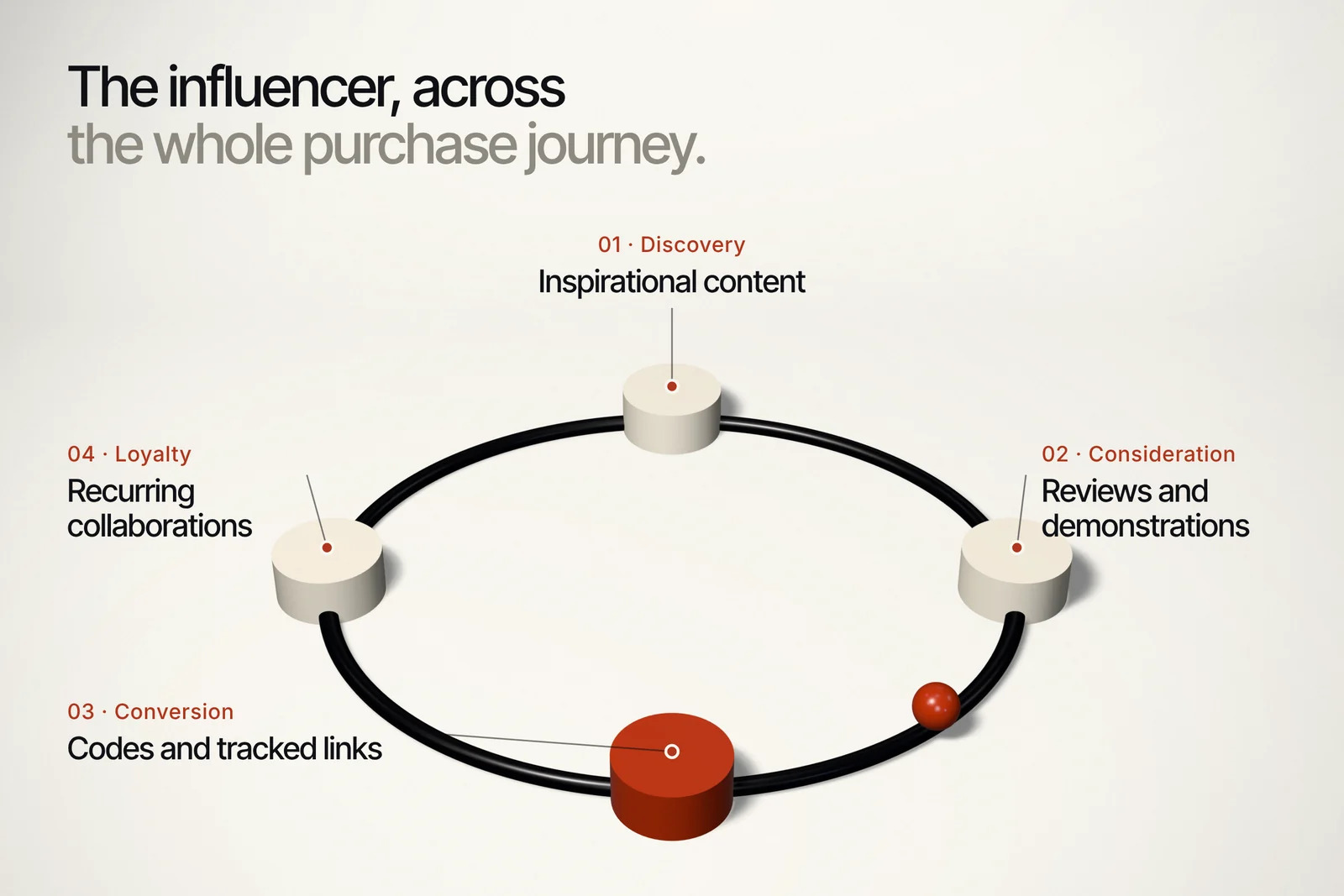
To maximise its impact, influencer marketing should form part of the complete customer journey, not be limited to the awareness phase. Some examples of strategic integration:
- Discovery: educational or inspirational content that introduces the product
- Consideration: reviews, comparisons or demonstrations of use
- Conversion: promotional codes, tracked links or launch campaigns
- Loyalty: recurring collaborations that reinforce the brand-customer relationship
When the influencer accompanies the user through different stages, the brand stops being an advert and becomes a recommendation.
Establish a Professional Collaboration Model
In ecommerce, influencer marketing should be managed with the same rigour as any other channel. This means clearly defining:
- Type of collaboration (fixed fee, commission per sale, hybrid model)
- Deliverables and content formats
- Usage rights for the content generated
- KPIs and evaluation criteria
A professional framework not only protects the brand, but also improves the relationship with influencers and makes longer-term, more profitable and consistent collaborations easier.
Measure Impact with Business-Oriented Metrics
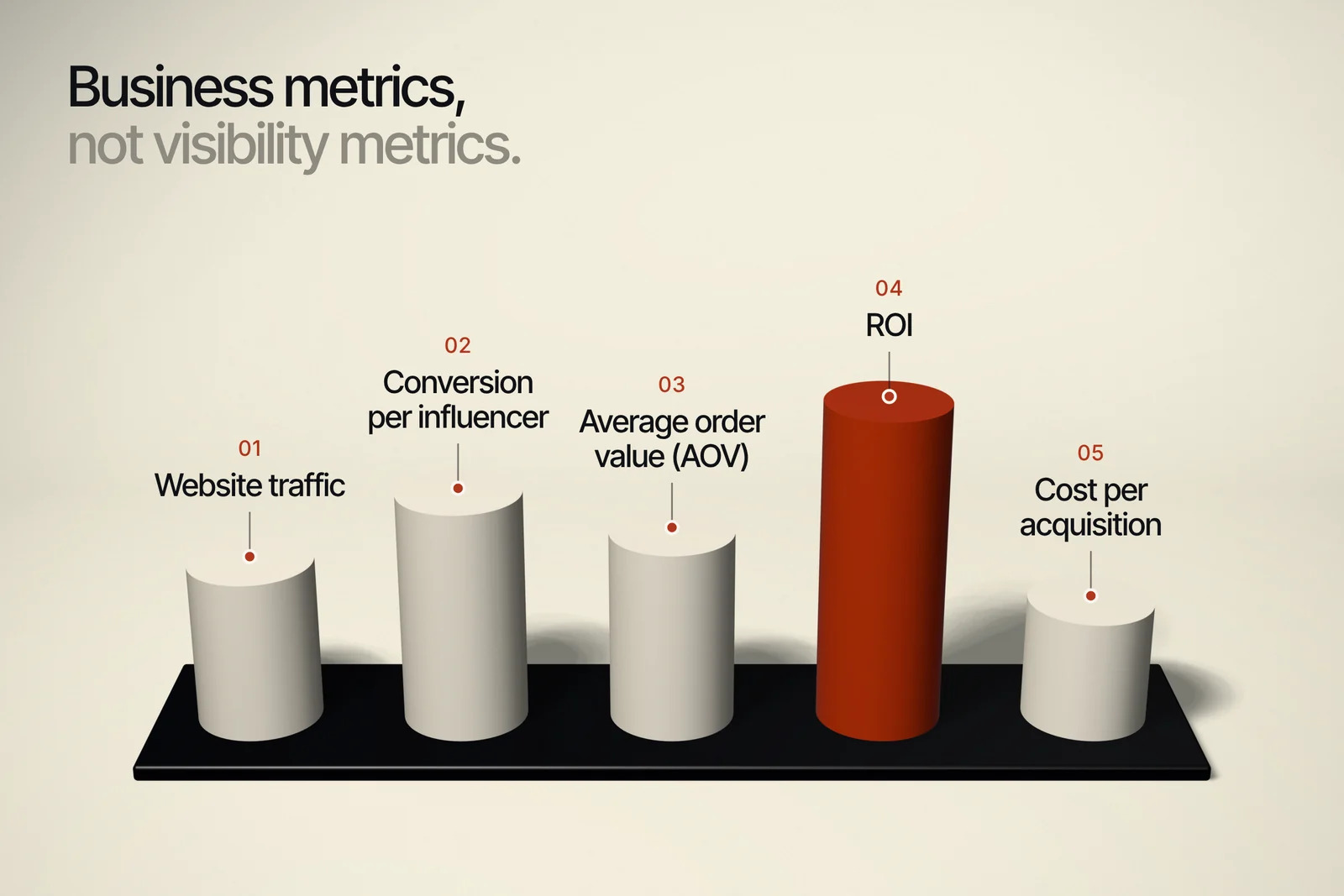
One of the most common mistakes is evaluating influencer marketing solely on visibility metrics. In ecommerce, the focus should be on actionable indicators such as:
- Website traffic generated
- Conversion rate per influencer
- Average order value (AOV)
- Return on investment (ROI)
- Cost per acquisition (CPA)
Using UTM links, personalised codes and management platforms makes it possible to obtain precise data and optimise campaigns continuously.
Scale the Strategy with Technology and Automation
When influencer marketing proves its results, the natural next step is scalability. To achieve this, it is key to rely on technology solutions that make it possible to:
- Identify influencers efficiently
- Manage multiple campaigns simultaneously
- Centralise metrics and reporting
- Automate payments and results tracking
Technology turns a creative tactic into a structured, predictable channel aligned with the growth of the ecommerce business.
Integrating influencer marketing into your ecommerce business is not an isolated tactical action, but a strategic decision that requires planning, consistency and measurement. When executed correctly, this channel not only drives sales, but also builds brand, credibility and lasting relationships with customers.
In a market where trust is the most valuable currency, influencers act as bridges: human, credible and effective. Well managed, they turn visibility into conversion and recommendation into business. Take your influencer marketing strategy to the next level
With FlowFlamingo, ecommerce brands can manage influencer collaborations professionally, centralise key metrics and optimise the performance of every campaign with a clear business vision.