Acquiring customers in 2026 calls for a more strategic approach than in previous years. People encounter an enormous amount of digital content every day, compare options quickly and expect clarity before making a purchase. Simply having an online presence is no longer enough. Brands need consistent touchpoints, genuine trust and a way to support buying decisions across multiple channels.
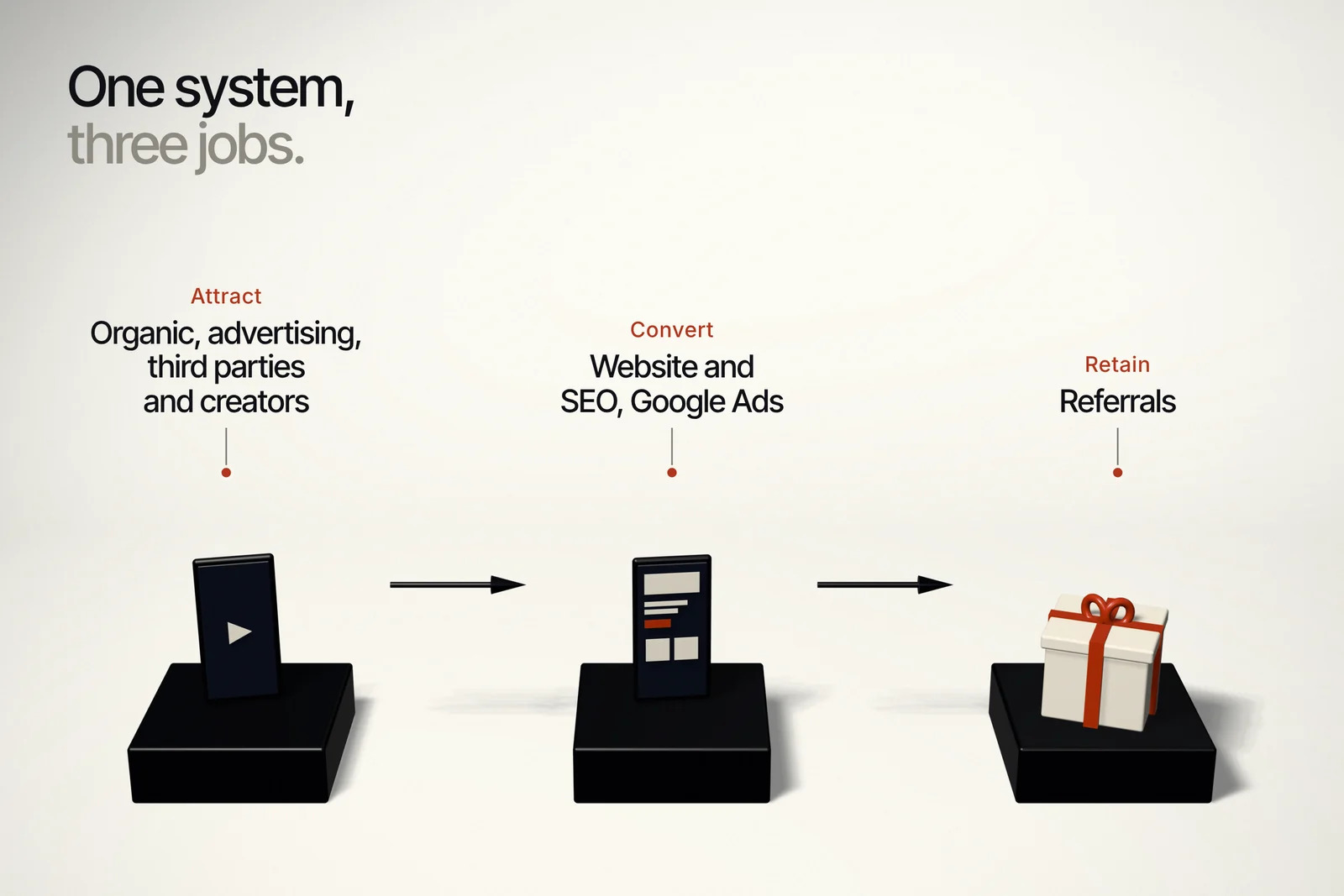
The brands that grow are those that bring content, advertising, digital reputation and commercial follow-up together under a shared strategy. Effective customer acquisition doesn’t depend on one isolated activity. It requires a coordinated system that attracts, converts and retains customers.
Creating Organic Content
Organic content remains one of the foundations of attracting potential customers. It allows brands to build an ongoing presence without relying entirely on advertising spend. Publishing useful, educational or inspiring content keeps a brand visible and reinforces its digital identity.
Social media is also an early research channel for many consumers before they buy. A well-developed organic strategy builds familiarity, strengthens trust and creates commercial opportunities over time when the content addresses genuine audience interests.
THE MISTAKE
Posting just to fill the content calendar. If your content doesn’t answer something your audience is already asking, it isn’t useful content. It’s noise with a logo attached.
Promoting Your Content
Social media advertising accelerates results and helps you reach people who don’t yet know your brand. In 2026, targeting remains a key advantage of platforms such as Facebook and Instagram, allowing advertisers to reach audiences through interests, behaviour, location and age.
Promoting well-designed content can increase reach, generate traffic and bring in leads in a controlled way. The key isn’t to boost every post. It’s to invest in content that has already demonstrated organic interest or has been created with a clear commercial purpose.
THE MISTAKE
Putting budget behind a piece of content that failed organically. Advertising amplifies what’s already there. If the content is mediocre, you’re simply paying to amplify mediocrity.
Building and Optimising Your Website
Your website remains one of your most important digital assets. It brings information together, builds trust and converts visitors into enquiries or sales. But simply having a website isn’t enough. It needs to be optimised for speed, user experience, structure and search visibility.
In 2026, users quickly abandon slow or confusing pages. A well-optimised website makes the buying journey easier, improves visibility in search engines and becomes a consistent acquisition channel when it responds to what your audience is searching for.
THE MISTAKE
Treating your website like a brochure. If nobody is measuring what visitors do on it, it isn’t an asset. It’s an expensive piece of decoration.
Running Google Ads Campaigns
Google Ads remains an important channel for attracting users with clear search intent. Unlike social media, search advertising reaches people who have already expressed a specific need through the words they use. That makes each campaign a potentially valuable commercial opportunity.
An effective strategy requires relevant keywords, precise ad copy and landing pages designed for conversion. With the right structure, Google Ads can attract qualified visitors who are more likely to take action.
THE MISTAKE
Paying for the right keyword and sending the click to your homepage. You’ve paid to capture someone’s intent, then thrown that opportunity away.
Planning Third-Party Content
Content created by third parties brings credibility because it presents opinions and experiences from voices outside the brand. These might be customers, creators, partners or real users sharing their experiences with a product or service.
In 2026, this type of content is especially valuable because people tend to trust real experiences more than purely promotional messages. Integrating it into a customer acquisition strategy can strengthen reputation and build trust during the earlier stages of a purchase decision.
THE MISTAKE
Asking a creator to repeat your brand’s sales pitch. The moment it sounds like an advert, it stops feeling like social proof and becomes advertising again.
Creating a Referral or Affiliate Programme
Referral and affiliate programmes remain effective because they use recommendations to drive customer acquisition. When a satisfied customer recommends a brand, the initial level of trust can be considerably higher than with traditional advertising. A well-designed incentive system encourages further recommendations over time.
Many brands are returning to this approach because it can combine lower acquisition costs with measurable results and gradual growth, particularly for digital businesses and subscription-based services.
THE MISTAKE
Launching the programme before you have a product people genuinely want to recommend. An incentive doesn’t fix a mediocre experience. It simply makes that experience more expensive.
Developing an Influencer Marketing Strategy
Influencer marketing remains powerful when creators, audiences and objectives are selected carefully. The aim isn’t to find the person with the most followers. It’s to identify voices with genuine credibility in a specific niche.
A well-designed campaign builds brand awareness more quickly, develops trust and generates relevant commercial traffic. In 2026, effective campaigns are those in which creators integrate products naturally into the content their audiences already know and follow.
THE MISTAKE
Choosing creators based on reach alone. You can buy reach. You can’t buy credibility. And only one of those gives people a reason to trust a recommendation.
How the Seven Strategies Work Together
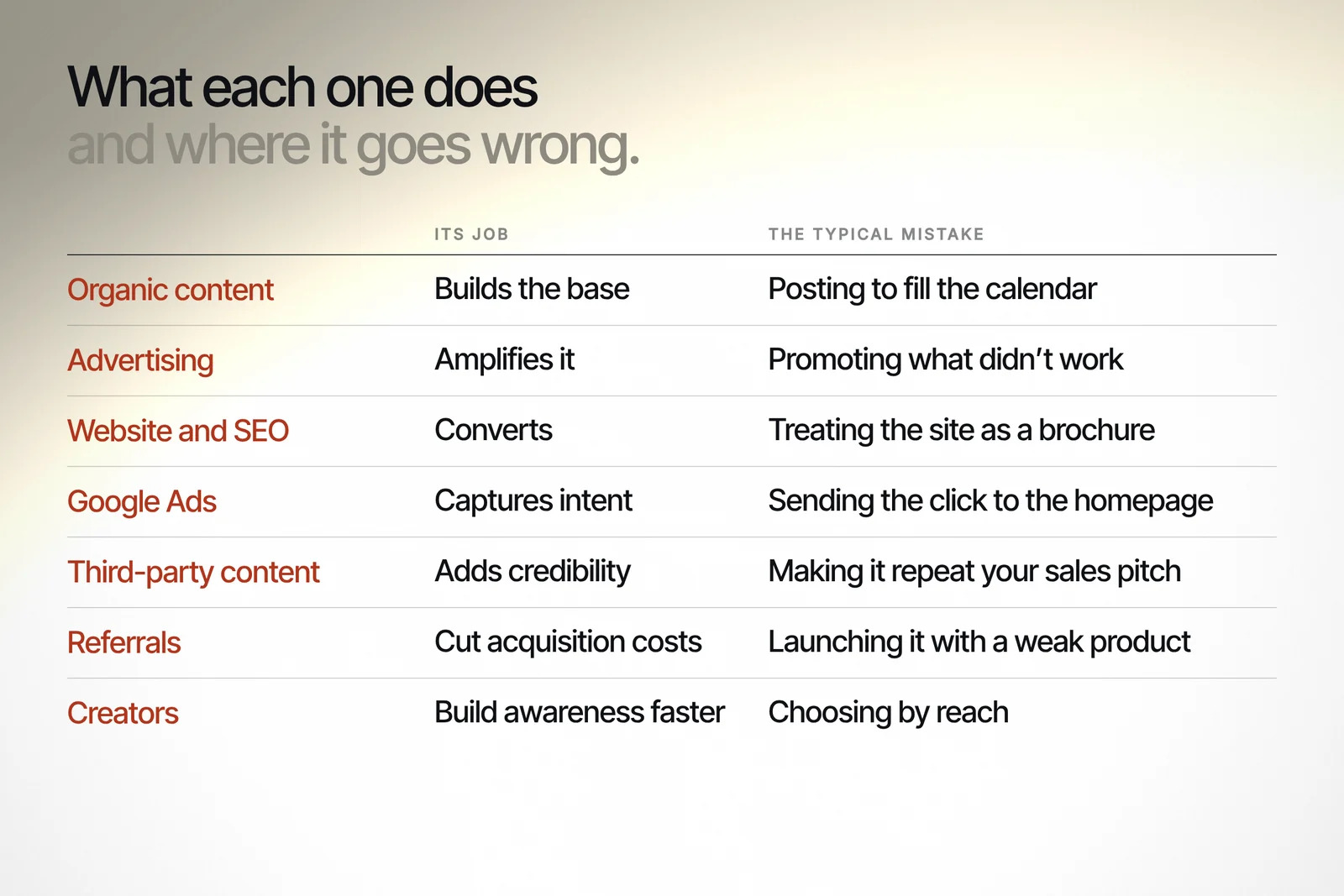
None of these seven strategies works in isolation. Each plays a different role:
- Organic content — builds the foundation.
- Advertising — amplifies it.
- Website and SEO — convert interest into action.
- Google Ads — capture existing intent.
- Third-party content — provides credibility the brand cannot give itself.
- Referrals — help reduce acquisition costs.
- Creators — accelerate brand awareness.
The right question isn’t which one to choose, but in what order to activate them and how to measure each one. That’s when a strategy stops being a list of tactics and becomes a genuine growth channel.