
n this article, we set out the different types of influencers that exist and how they can help brands achieve their marketing objectives.
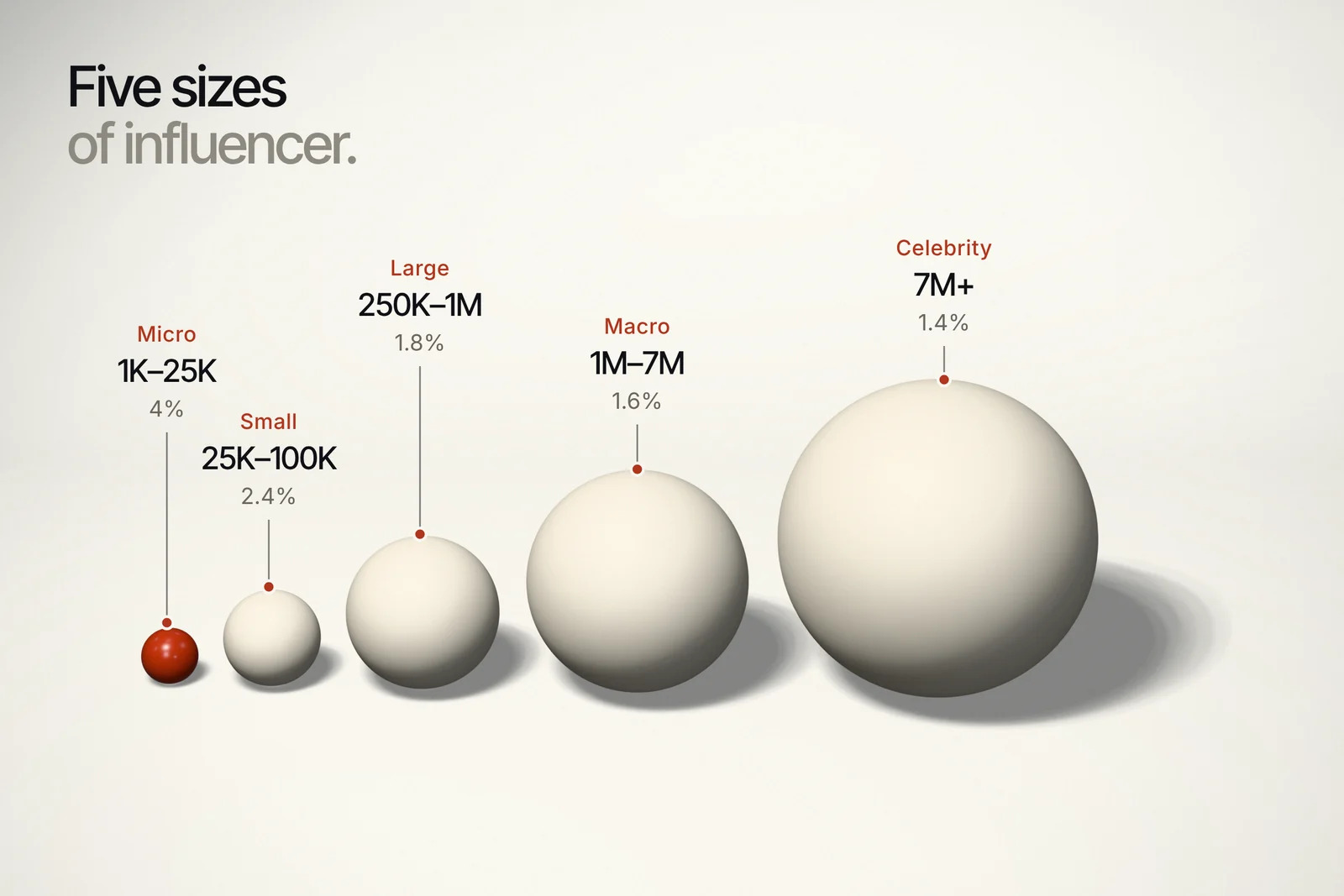
Influencers have changed the way brands connect with their audience on social media. You may have seen different categories of influencers, based on their number of followers, type of content, engagement rate and so on. Classifying influencers by number of followers can help brands better understand the different levels of reach and engagement each type of influencer can offer.
Micro-Influencers
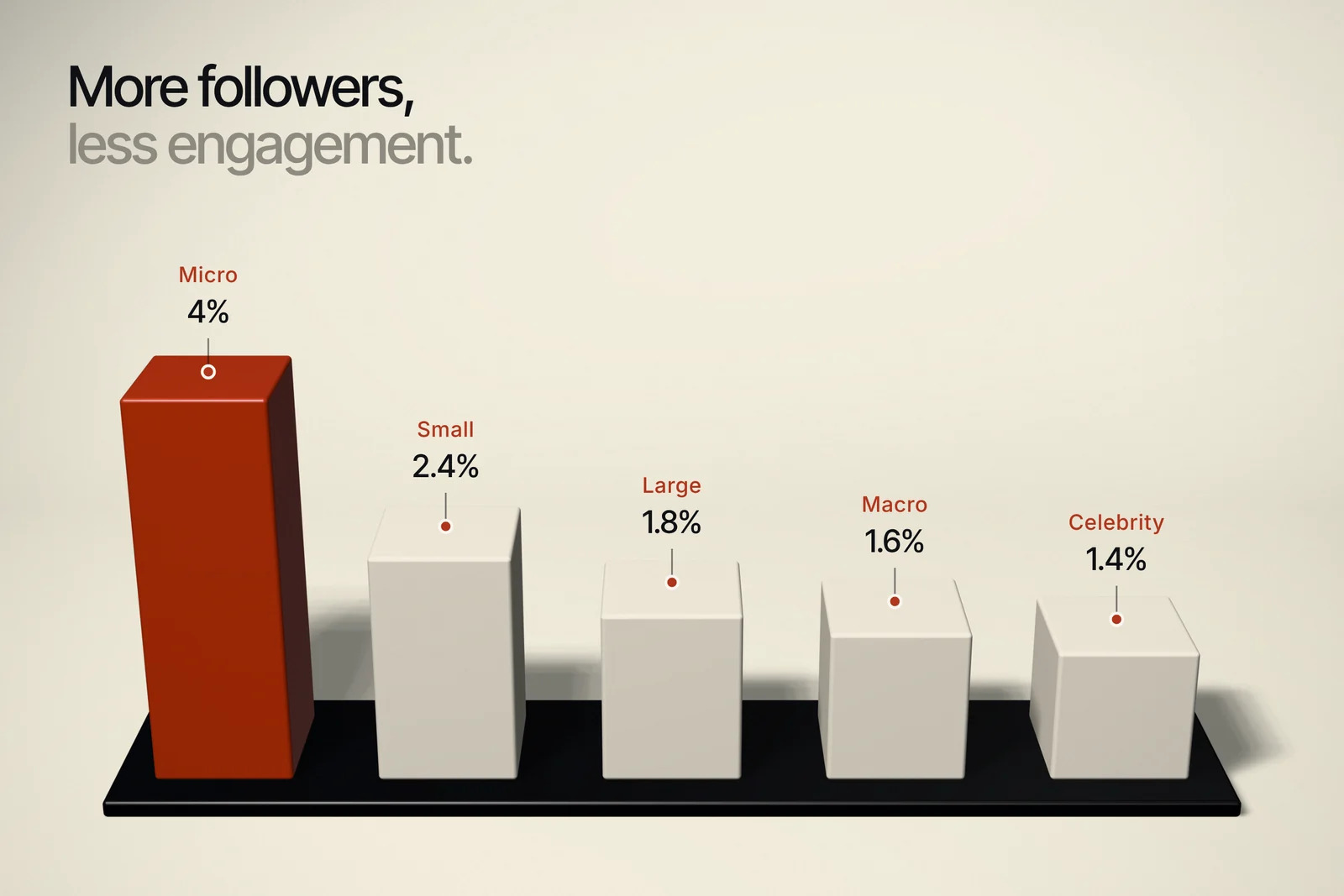
Micro-influencers are those with between 1,000 and 25,000 followers and an engagement rate of 4%. These influencers tend to have a highly engaged, active audience, which makes them an excellent option for marketing campaigns with a more specific focus. Find out how to find the best micro-influencers for your brand
Small Influencers
So-called small influencers are those with between 25,000 and 100,000 followers and an engagement rate of 2.4%. Although their reach is smaller than that of macro- and mega-influencers, these small influencers have a highly engaged, active audience, which makes them an excellent option for marketing campaigns with a more specific focus.
Large Influencers
Within the types of influencers, this group of creators has between 250,000 and 1 million followers and an engagement rate of 1.8%. These influencers have significantly greater reach than small influencers, which makes them a good option for marketing campaigns seeking to reach a wider audience.
Macro-Influencers
Macro-influencers are a type of influencer with great reach, between 1 and 7 million followers and an engagement rate of 1.6%. They are very popular and have a large number of followers. However, because of their large following, their audience is not as close as that of micro-influencers. Even so, they can be very effective for promoting products or services thanks to their broad reach.
Celebrities
Celebrities are famous people with more than 7 million followers and an engagement rate of 1.4%. These types of influencers usually belong to a very general field of interest such as entertainment, sport or politics. They have a large number of followers on social media and a very varied audience, which makes it more difficult to segment their audience.
Influencers can be very effective for promoting products or services thanks to their ability to reach a specific audience. According to a study cited by Influencer Marketing Hub, businesses earn $5.78 for every $1 spent on influencer marketing, which represents a great opportunity for brands to make their marketing activity profitable.
The types of influencers you select for your campaign should be in keeping with your brand and products so that the collaboration is credible. Analysing their community is also fundamental, looking at the age, gender and geographical origin of their followers.