
From social media presence to digital advertising and the creation of trustworthy content, there are many actions that can help position a beauty brand. Below, we explore some of the most effective marketing strategies for cosmetics brands looking to grow and strengthen their online presence.
Social Media Content
In the cosmetics industry, social media acts as brands’ main communication channel. It not only allows them to showcase products, but also to build a close relationship with the people who use them, or are interested in using them.
Through consistent, authentic posts, companies can create a loyal community made up of people who trust the brand, engage with its content and, over time, become repeat customers.
When a cosmetics brand manages to build this bond, sales no longer depend solely on one-off campaigns or aggressive promotions. Instead, it builds a solid base of followers who look forward to launches, recommend the products and take an active part in the conversation. This community acts as a constant engine of visibility and growth.
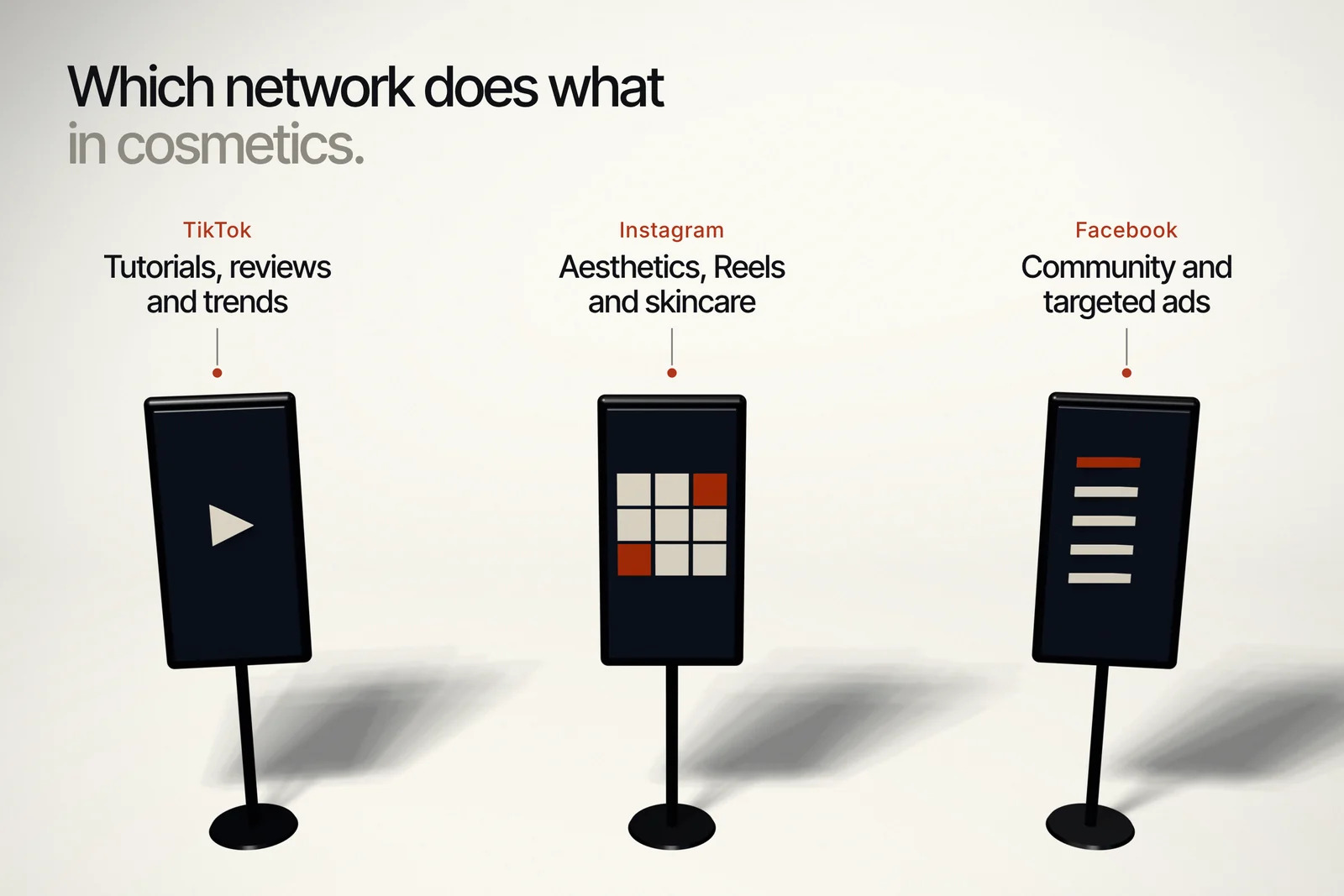
To achieve this, it is key to be present on the platforms where the audience actually spends its time. Currently, TikTok, Facebook and Instagram stand out as the most important social networks for beauty brands.
️TikTok allows brands to showcase products dynamically through tutorials, reviews and viral trends that can multiply a brand’s reach in a matter of days.
Instagram is ideal for highlighting product aesthetics, sharing attractive visual content, make-up or skincare Reels and strengthening brand identity.
Facebook, meanwhile, remains a valuable space for building communities, managing comments and making use of targeted advertising tools.
By combining creative content, audience interaction and a consistent posting strategy, social media becomes a key channel for building trust, strengthening the community and maintaining a sustained flow of sales over time.
Website Optimisation
In the digital world, a cosmetics brand that wants to grow sustainably needs more than a social media presence: it needs its own website, preferably with an online shop. A place where customers can discover the products, explore the company’s identity and make purchases directly.
Having an online shop not only makes the sales process easier, but also helps build authority in the market. An optimised website is essential for improving rankings in search engines such as Google, as a range of actions can increase its chances of appearing in search results for people interested in make-up, skincare or personal care.
Investing in Google Ads and Meta Ads
Although organic growth is key to building a solid brand, digital advertising makes it possible to accelerate results and reach new customers much faster. In the cosmetics sector, where competition is high and trends change constantly, investing in paid campaigns can make a significant difference to visibility and sales.
Platforms such as Google Ads and Meta Ads (Facebook and Instagram) offer advanced targeting tools that allow products to be shown to people with specific interests in beauty, skincare, make-up or personal care. In this way, brands can direct their ads to users who are genuinely more likely to buy.
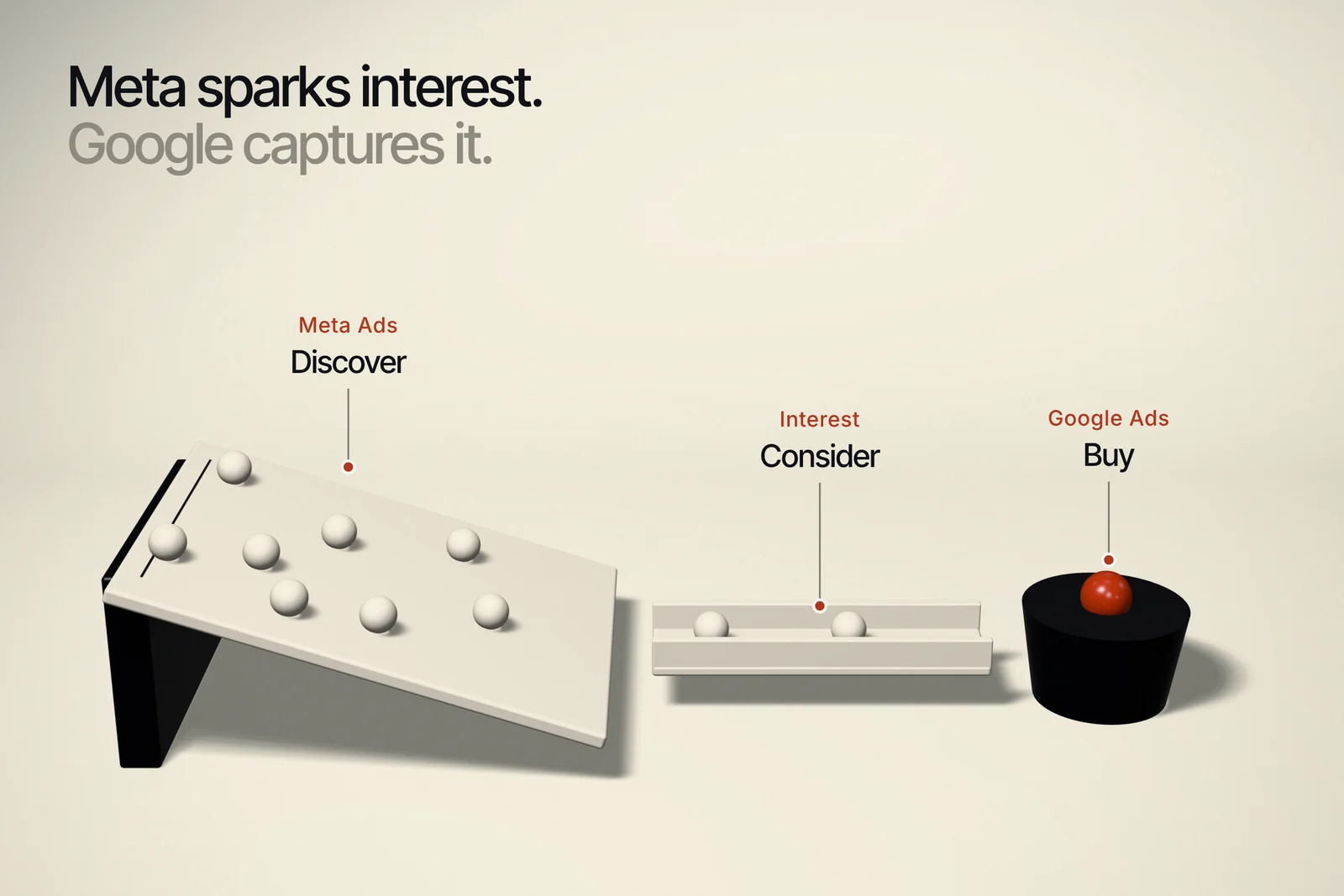
On the one hand, Google Ads allows a brand to appear in search results when users are actively looking for cosmetics products. This means the brand can position itself in front of potential customers at the exact moment they have purchase intent, for example when they search for terms such as “buy foundation”, “anti-wrinkle cream” or “best sunscreen for the face”.
On the other hand, Meta Ads is particularly effective for generating brand discovery. Through visual ads on Facebook and Instagram, companies can showcase their products, highlight their benefits and capture the attention of new users while they browse their social feeds. These platforms also make it possible to create remarketing campaigns aimed at people who have already visited the website or interacted with the brand previously.
When combined correctly, Google and Meta Ads make it possible to build a complete marketing funnel: attracting new users, generating interest in the products and accompanying them through to the moment of purchase.
Email Marketing Campaigns
Email marketing remains one of the most effective strategies for maintaining a direct relationship with customers. In the cosmetics sector, where loyalty plays a fundamental role, email keeps the connection alive with people who already know the brand and are interested in its products.
Through email marketing campaigns, companies can share news of new launches, exclusive promotions, beauty tips or skincare routines, generating content that adds value and keeps the audience engaged with the brand. This type of direct communication helps strengthen trust and reminds customers that the brand remains part of their everyday lives.
Email marketing also allows the audience to be segmented by different criteria, such as purchase history, interests or behaviour on the website. This makes it possible to send far more personalised messages, increasing the likelihood of conversion. For example, someone who bought facial skincare products could receive recommendations for complementary serums or creams.
Collaborating with Influencers and Content Creators
As in many industries and sectors, the beauty sector carries enormous weight in purchase decisions. That is why collaborating with influencers and content creators has become a key strategy for cosmetics companies looking to increase their visibility and build trust with their audience.
Content creators tend to have highly engaged communities that value their opinions and experiences with different products. When an influencer shows how they use a cosmetic, shares an honest review or films a tutorial, the product stops being just an advert and becomes part of a real experience. This creates a more authentic, relatable perception for potential customers.
Collaborations also allow brands to reach specific audiences that are already interested in topics such as make-up, skincare or personal care. Depending on the strategy, companies can work with large influencers to achieve mass reach or with micro-influencers, who tend to have smaller but highly engaged communities.
Building Trust Through Reviews and UGC
Trust is one of the most important factors when making a purchase decision. Consumers want to know how products work in real life, what results they can expect and what other people think before trying something new. That is why creating trustworthy content, such as reviews and user-generated content (UGC), has become a key strategy for beauty brands.
Customer reviews help provide transparency and credibility. When someone shares their experience of using a product, whether a cream, a serum or make-up, they offer valuable information for other potential buyers. Displaying real opinions in the online shop or on social media can significantly influence purchase decisions and reduce users’ doubts.
User-generated content (UGC), meanwhile, adds a more authentic dimension to the brand’s marketing. Photographs, videos, testimonials or tutorials created by real customers show how the products fit into people’s daily routines. This type of content tends to generate greater trust because it does not come directly from the company, but from people who have already tried the products.
Brands can encourage this kind of participation through social media campaigns, specific hashtags, competitions or rewards for those who share their experience with the products. As well as increasing credibility, UGC also helps build an active community around the brand.