
Offering a good service no longer guarantees that a business will gain visibility, attract new customers or stand out. People can find dozens of similar alternatives on social media and search engines before deciding where to train, which product to buy or which professional to trust.
For this reason, the best marketing strategies for fitness businesses should not be limited to posting workout photos or launching one-off discounts. You need to build a recognisable proposition, connect with a specific audience and support potential customers throughout their decision process.
Turn Social Media into a Customer Acquisition Channel
Instagram, TikTok and YouTube allow a fitness business to show the experience it offers in a highly visual way. However, posting consistently is not enough if the content is not guided by a strategy.
Social media should combine education, entertainment, inspiration and demonstrations of the service. Training tips can attract interested people, while testimonials, customer stories and images of the venue help reduce doubts before someone makes a booking.
Educational content allows you to demonstrate expertise without constantly resorting to commercial messages. Explaining common mistakes, debunking myths or showing how an exercise is performed can position the brand as a reference within its specialism.
Emotional content also plays an important role. People do not always start training purely for physical reasons. Many want to feel better, regain confidence, meet people or get through a difficult period. Communicating these motivations creates a deeper bond than a simple promotion.
It is also worth showing the human side of the business. Introducing the team, showing how a class is prepared or sharing real moments helps the audience get to know the atmosphere before they visit. In a sector where trust is decisive, this familiarity can significantly lower the barrier to entry.
Every piece of content should lead to a specific action. It might be visiting the website, requesting information, booking a trial class, downloading a resource or sending a message. Without that next step, social media can generate engagement without producing commercial results.
Collaborate with Specialist Fitness Influencers
Influencer marketing is one of the most effective strategies for bringing a fitness business to new audiences. Content creators have already built relationships with communities that follow their recommendations, routines and experiences.
This trust makes it possible to present a brand in a more natural context than traditional advertising. Rather than simply showing the service, the influencer can try it, explain their experience and show how it fits into their lifestyle.
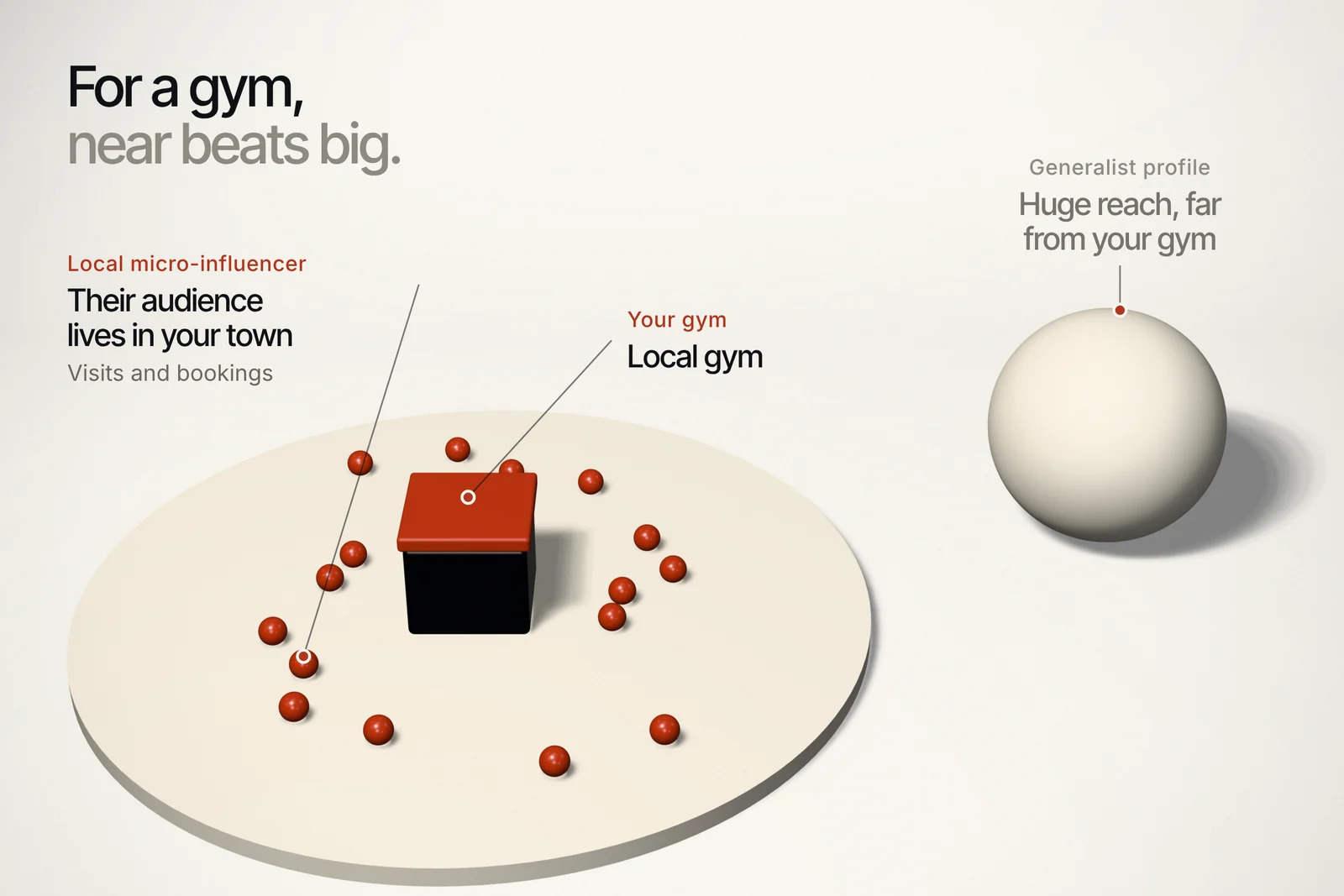
Choosing the right creator matters more than their follower count. A creator with a smaller but local, engaged audience can deliver better results for a gym or studio than a generalist profile with a massive community.
You need to analyse where followers are located, their interests, the level of engagement, the quality of the content and the fit between the influencer’s values and the company’s. You should also check that the community is genuine and that previous collaborations have maintained credibility.
For a local business, working with micro-influencers in the same city can help generate visits and bookings. An online sports equipment shop, on the other hand, can collaborate with creators from different regions and use personalised links or codes to measure sales.
Creativity also determines performance. A single post showing a product usually has less impact than an experience developed across several pieces of content. A training challenge, a documented transformation or participation in an event make it possible to build a story and sustain interest for longer.
Use UGC to Build Trust
User-generated content, known as UGC, shows products or services from an everyday perspective. Its value lies not in achieving a perfect advertising finish, but in conveying closeness and credibility.
Someone explaining what their first class was like, showing a routine or sharing their experience with a product can be more convincing than a corporate piece. The audience can see themselves in that situation and more easily understand how the proposition could help them.
Brands can use this content on their profiles, product pages, adverts and remarketing campaigns. They can also request different versions to address their audience’s main objections.
A sportswear brand, for example, could create videos focused on the comfort, fit and behaviour of a garment during different exercises. An online trainer could show how their platform works, what the programme includes and how progress is tracked.
UGC works particularly well when it presents a specific experience and avoids sounding like an advertising script. The aim is to show the brand in action and allow potential customers to imagine their own experience.
Create Content That Answers Real Questions
A blog can help attract users during the early stages of their decision. Before joining a gym, buying supplements or hiring a trainer, people look for information to resolve their doubts.
Content should start from those searches, not only from the topics the company wants to communicate. A sports nutrition brand can publish guides on how to use its products and their characteristics. A training centre can answer questions about class types, initial preparation, frequency or expected results.
Each article should answer a query in depth and direct the reader towards a related next step. The aim is not to force a sale, but to guide the user from information to consideration of the brand.
It is also worth reviewing and updating existing content regularly. A good article can keep attracting visits for years if its information stays current, its structure is clear and it connects properly with the business’s services.
Lower the Barrier to Entry with an Introductory Experience
Many people feel uncertain before starting a fitness activity. They may fear not being fit enough, not understanding the exercises, feeling watched or committing to a subscription they will not use.
Offering a trial class, an initial assessment or a limited access period helps reduce that risk. The potential customer stops imagining what the experience will be like and can try it directly.
This offer should come with a simple process. If booking a free class requires completing an endless form or waiting several days for a reply, the opportunity may be lost.
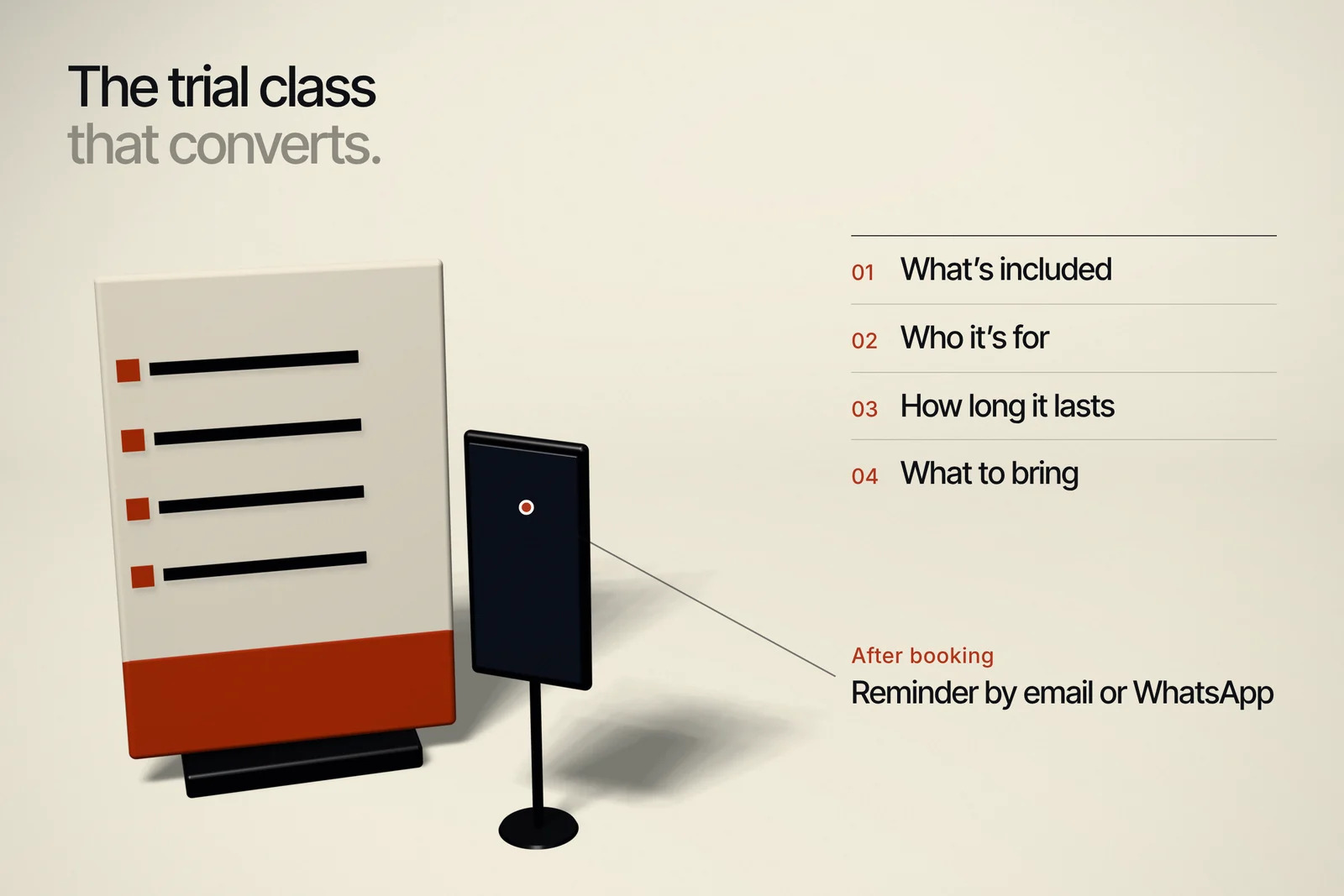
The landing page should explain what the experience includes, who it is designed for, how long it lasts and what the person needs to bring. After the booking, reminders by email or WhatsApp can reduce no-shows. The trial should not be seen merely as a promotion. It is the first real contact between the customer and the brand, so the attention received during that visit will directly influence whether they sign up.
Use Digital Advertising to Accelerate Customer Acquisition
Advertising on Google, Instagram, Facebook or TikTok makes it possible to reach specific users and obtain results faster than organic channels. However, its effectiveness depends on the proposition and the journey that follows.
Google Ads can be suitable for capturing people who are already searching for a gym, trainer or specific service. Social media campaigns can spark interest, present the experience and reach audiences defined by location, age or interests.
Sending all traffic to the homepage usually reduces conversions. Each campaign should lead to a page designed for the advertised offer, with sufficient information, testimonials and a visible call to action.
Remarketing is also important. Many people visit a website or interact with a post but do not make an immediate decision. Showing them new adverts can keep the brand present and resolve outstanding objections.
Advertising investment should be evaluated on the basis of bookings, trials, customers and revenue, not just clicks or impressions. A campaign with many visits is not profitable if it does not generate quality commercial opportunities.
Implement a Referral Programme
Satisfied customers can become one of the most valuable acquisition channels. In the fitness sector, a personal recommendation reduces distrust and can make it easier for someone to take the first step alongside a person they know.
The programme should offer a clear benefit and be simple to use. The reward can consist of additional sessions, discounts, products or access to exclusive services. It is also possible to reward both the existing customer and the person referred.
Beyond attracting new users, these initiatives help strengthen the community. Training with friends or family can increase motivation and improve consistency, which also benefits retention.
A one-off campaign can generate a spike in attention. A coherent strategy can turn that attention into recognition, customers and sustainable growth.
If you want to connect your fitness business with creators who can represent its values, FlowFlamingo can take care of planning, influencer selection, execution and campaign analysis. Contact FlowFlamingo to develop a strategy tailored to your objectives.