Consumers are exposed to advertising constantly. They compare alternatives, read reviews, watch demonstrations on social media and look for information before making a decision. That is why an effective promotion cannot be limited to publishing a photograph with a price and a purchase link.
Define Your Target Audience
Before deciding how to advertise a product, you need to understand who might be interested in buying it. Targeting an audience that is too broad usually produces generic messages and inefficient campaigns.
Audience research should cover demographics, interests, consumption habits, needs and digital behaviour. It should also examine what problem the person wants to solve, what alternatives they currently use and what objections might prevent a purchase.
Two consumers can buy the same product for completely different reasons. One person might buy a pair of trainers to improve their performance, while another might choose them for comfort or design. Although the product is identical, the message used to connect with each audience should not be.
It is also important to know where your audience looks for information. Some people discover new products on TikTok or Instagram, while others go straight to Google, YouTube, marketplaces or recommendations from creators.
Build a Clear Value Proposition
A promotional strategy must explain why the product deserves the consumer’s attention. Listing features is not always enough, especially when similar alternatives exist.
The value proposition should turn features into tangible benefits. Rather than simply stating that a battery has a certain capacity, the brand can explain how many hours of use it provides. Instead of only mentioning the material of a garment, it can show how that material improves comfort or performance when worn.
It should also answer why the consumer should choose this product rather than another. The difference might lie in quality, price, design, sustainability, technology, specialisation, the shopping experience or after-sales service.
An effective proposition is usually specific, easy to understand and relevant to the audience. If it takes several paragraphs to explain, it probably is not clear enough yet.
This core idea should be consistent across the website, social media, adverts and creator collaborations. Consistency helps people remember the product and quickly understand where it sits in the market.
Set a Clear Promotional Objective
Not every campaign should pursue the same result. A new product may need visibility and recognition, while an established one may focus on increasing sales or winning back previous buyers.
Defining an objective makes it possible to decide which message to use, which channels to activate and how to measure performance. A campaign designed to build awareness can work with high-reach content. A campaign focused on conversions, on the other hand, will need a clear offer, an optimised product page and precise tracking.
It is also worth distinguishing between the objectives of each stage. During the launch, the brand may be looking for views, visits and new followers. Afterwards, it can concentrate on generating sign-ups, adding products to the basket or completing sales.
Trying to achieve every objective with a single piece of content usually dilutes the message. Each campaign should offer a clear next step so that the consumer knows what to do after discovering the product.
Develop a Product Launch Strategy
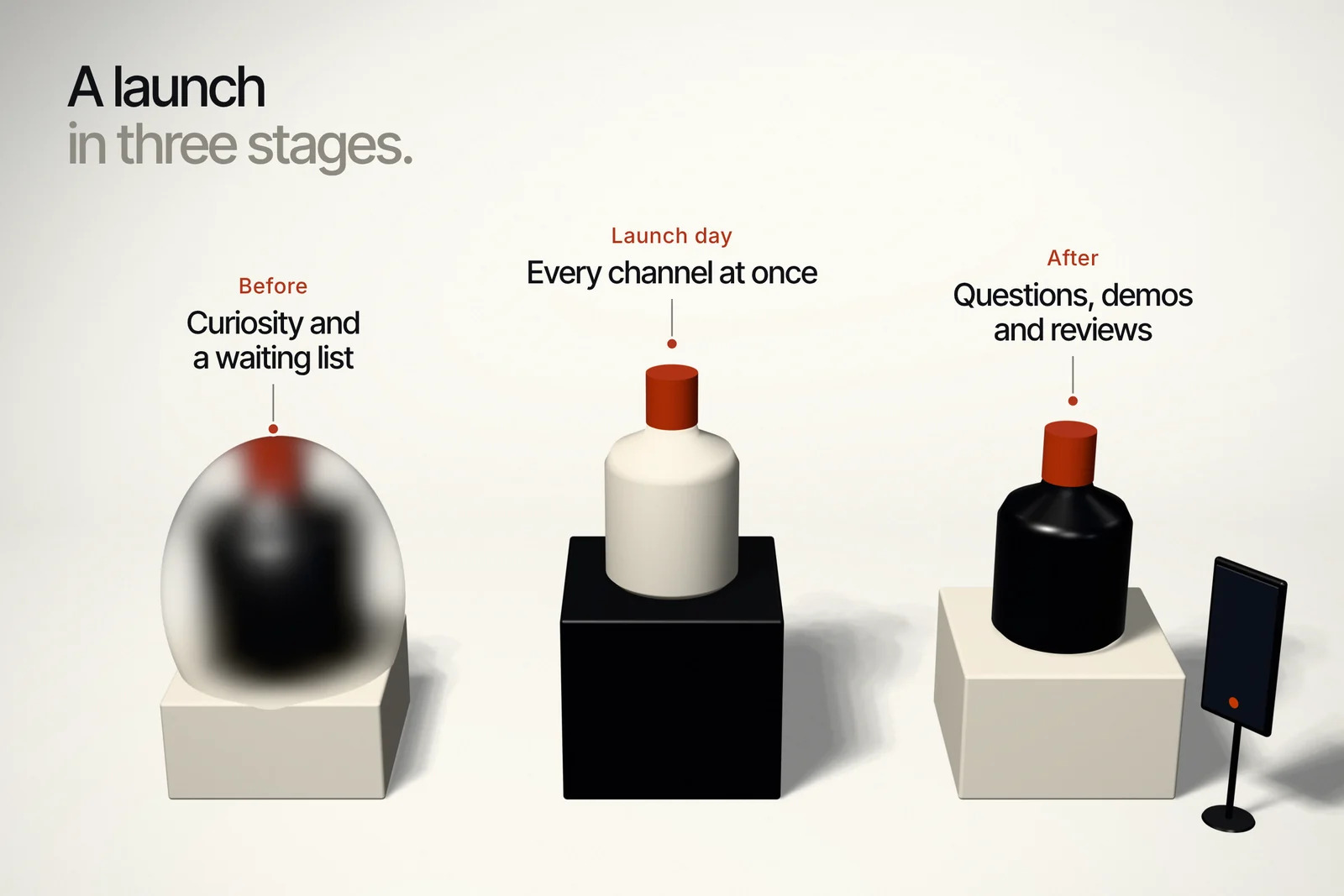
A launch does not begin on the day the product goes on sale. Promotion can start in advance to spark curiosity, capture contacts and prepare the audience.
During this first stage, you can share partial details, explain the problem you want to solve or show part of the development process. The aim is not to reveal all the information, but to create a narrative that invites people to follow the launch as it unfolds.
You can also create a waiting list with early access, an exclusive benefit or additional information. This contact base brings together people who have already shown interest and makes communication easier once the product is available.
Launch day should concentrate the main impact. The social media presentation, adverts, emails and influencer collaborations can be coordinated to heighten the sense of novelty.
After the launch comes an equally important stage. The brand must answer questions, share demonstrations, gather feedback and use the first results to improve the campaign. The initial momentum attracts attention; continuity is what usually turns that attention into sales.
Use Social Media to Showcase Your Product
Social media makes it possible to demonstrate a product visually and in context. Consumers do not just see what it looks like; they can understand how it works and how it might fit into their lives.
Short-form videos are particularly useful for presenting benefits, explaining functions, answering questions or comparing different uses. They also make it possible to show results without relying on lengthy descriptions.
Content should not be limited to commercial pieces. A balanced strategy can educate, entertain and help people make decisions. Tutorials, comparisons, demonstrations, FAQs and content related to the problem the product solves all add value before asking for the purchase.
Showing the manufacturing process, the team’s work or the decisions made during development can also build closeness. People tend to connect better with brands that show a recognisable identity rather than just a catalogue.
The choice of platform should depend on the audience and the available format. TikTok and Instagram can favour discovery, while YouTube is suited to detailed explanations. LinkedIn may be relevant for products aimed at businesses or professionals.
Promote Your Product Through Influencers
Influencer marketing makes it possible to present a product in a relatable, credible context. The creator can try it, show how it works and explain their experience in their own words.
This form of communication reduces the distance between the brand and the consumer. Rather than receiving only a corporate message, the audience sees how someone they trust uses the product in a real situation.
Choosing the influencer is one of the most important decisions. Follower numbers should not be the only criterion. You also need to assess their affinity with the product, the quality of their audience, their level of engagement, their location and the credibility of their recommendations.
A micro-influencer with a specialist community can deliver better results than a mass-market creator with an audience that is too general. For a niche product, relevance is usually worth more than reach alone.
The collaboration also needs a creative concept. Sending the product and asking for a post can produce forgettable content. A demonstration, a challenge, a comparison or an experience developed over several days can show its benefits in greater depth.
Incorporate UGC into Your Campaign
User-generated content, or content from UGC creators, helps show the product from a more everyday perspective. It usually uses a visual language close to what people habitually consume on social media.
This type of content can present an experience, resolve a doubt or show the result obtained. Its less promotional appearance makes it easier for the message to blend naturally into the digital environment.
Brands can use UGC on their own profiles, product pages, advertising campaigns and emails. The same idea can also be adapted with different approaches to see which generates the best response.
For example, one video can focus on the problem the product solves, another on the experience of using it and a third on how it differs from an alternative. This variety makes it possible to speak to consumers at different stages of the decision. The content should keep the brand’s identity without losing spontaneity. The balance between clear guidance and natural execution usually produces the most credible pieces.
Create a Conversion-Focused Page
Promotion can attract visits, but the product page is what must turn that interest into action. If the information is insufficient or the navigation raises doubts, the investment made in other channels loses effectiveness.
The page should clearly present the main benefit, the features, the price, the purchase conditions and the call to action. It is also worth including photographs from different angles, videos of the product in use and answers to the most common questions.
Customer reviews build trust and help reduce uncertainty. To be useful, they should be specific and linked to the real experience of the product.
Friction also needs to be removed. The purchasing process should be simple, especially on mobile devices. Additional costs, delivery times and returns policies should be communicated before the user reaches the final step.
A good page does not try to impress with unnecessary information. Its job is to answer the questions that could prevent the purchase and make the decision easier.
Use Advertising to Increase Reach
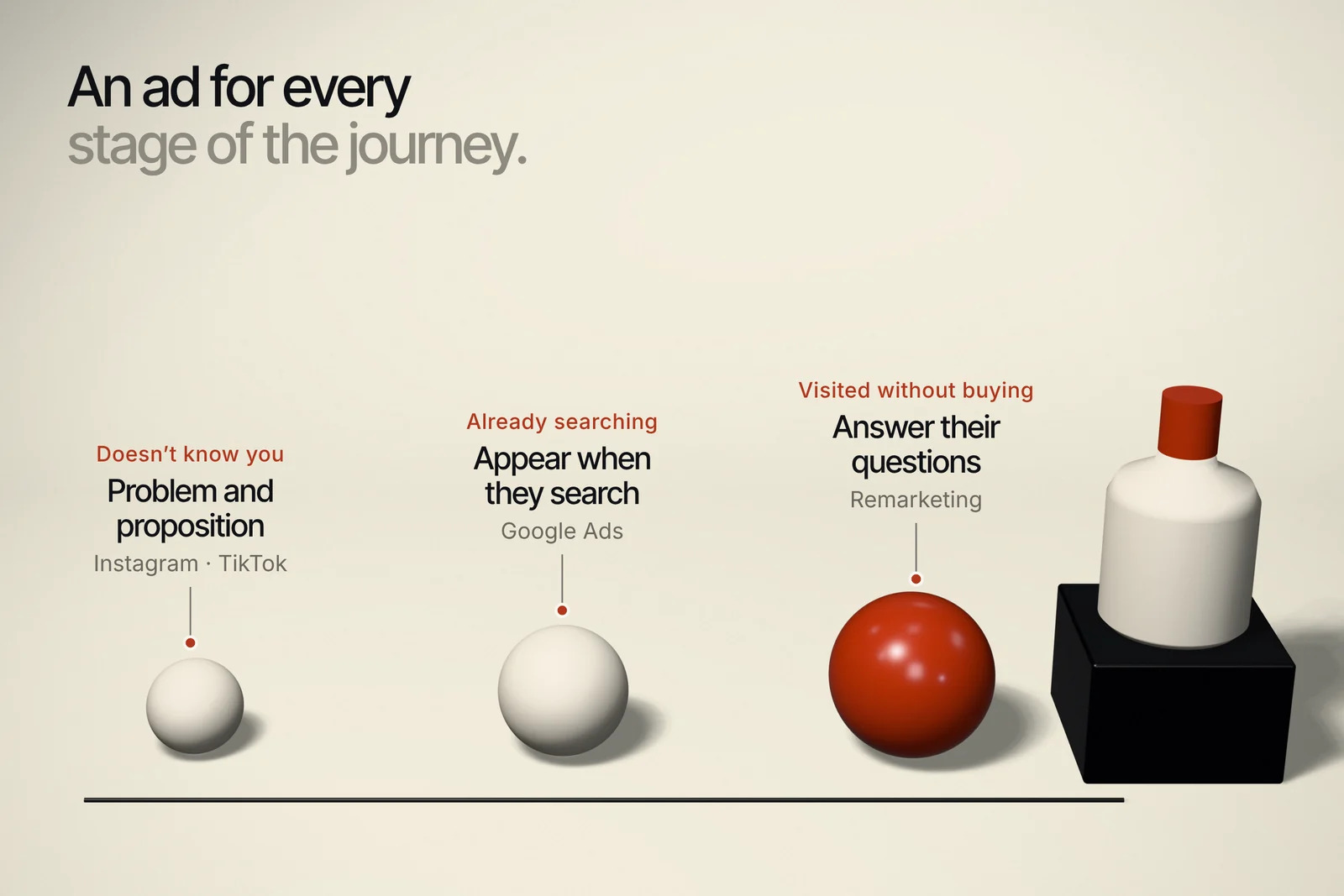
Advertising accelerates visibility and reaches specific audiences. Google Ads can capture users who are already searching for a type of product, while campaigns on Instagram, Facebook or TikTok help generate discovery.
The creative should be adapted to the audience’s level of awareness. Someone who has never heard of the product first needs to understand the problem and the proposition. Someone who has already visited the page may respond better to a demonstration, a review or an offer.
Remarketing makes it possible to reach users who showed interest but did not buy. These campaigns can use different content to address possible objections or recall the benefits.
Adverts should test different messages, formats and audiences. It is not always possible to predict which combination will work best. Controlled experimentation helps identify opportunities and concentrate investment in the most profitable pieces.
The key is not to use every available tactic, but to create a coherent combination and measure how each activation contributes to the commercial objective.
If you need to promote a product through creators who can connect with your audience, at FlowFlamingo we can develop and manage the campaign from the initial idea to the measurement of results. Contact FlowFlamingo and turn your next launch into a story your audience wants to discover.