
You may not be entirely sure how it works. As an agency specialising in influencers, we explain the main principles behind the current regulations and what they mean for content creators and brands.
What Are Spain’s Influencer Regulations?
Law 13/2022, known as the General Law on Audiovisual Communication (LGCA), came into force on 9 July 2022. It provides a legal framework for audiovisual communication and includes provisions relevant to influencers and content creators, regulating the content they promote on their social media.
These regulations address online advertising, particularly the promotion of products or services by creators on social media. Their purpose includes making sponsored content identifiable and helping consumers understand when they are seeing commercial communications.
These audiovisual services can have a significant impact on society and require a regulatory framework that reflects changes in digital communication. The legislation also addresses principles such as equality, non-discrimination and the avoidance of gender stereotypes.
Why Are Influencer Regulations Needed in Spain?
The growing popularity of influencers and the increasing importance of online advertising have created a need for clearer rules governing commercial communications. These regulations aim to help consumers identify sponsored content and encourage brands and creators to follow ethical, transparent advertising practices.
How Do the Regulations Affect Influencers and Brands?
Spain’s influencer regulations affect creators who promote products or services and the businesses that collaborate with them. Influencers subject to the applicable rules must comply with relevant advertising disclosure requirements and provide clear information about their commercial relationships with brands. Brands, in turn, need to ensure that promotional collaborations are presented transparently and that advertising can be identified as such.
Obligations for Influencers
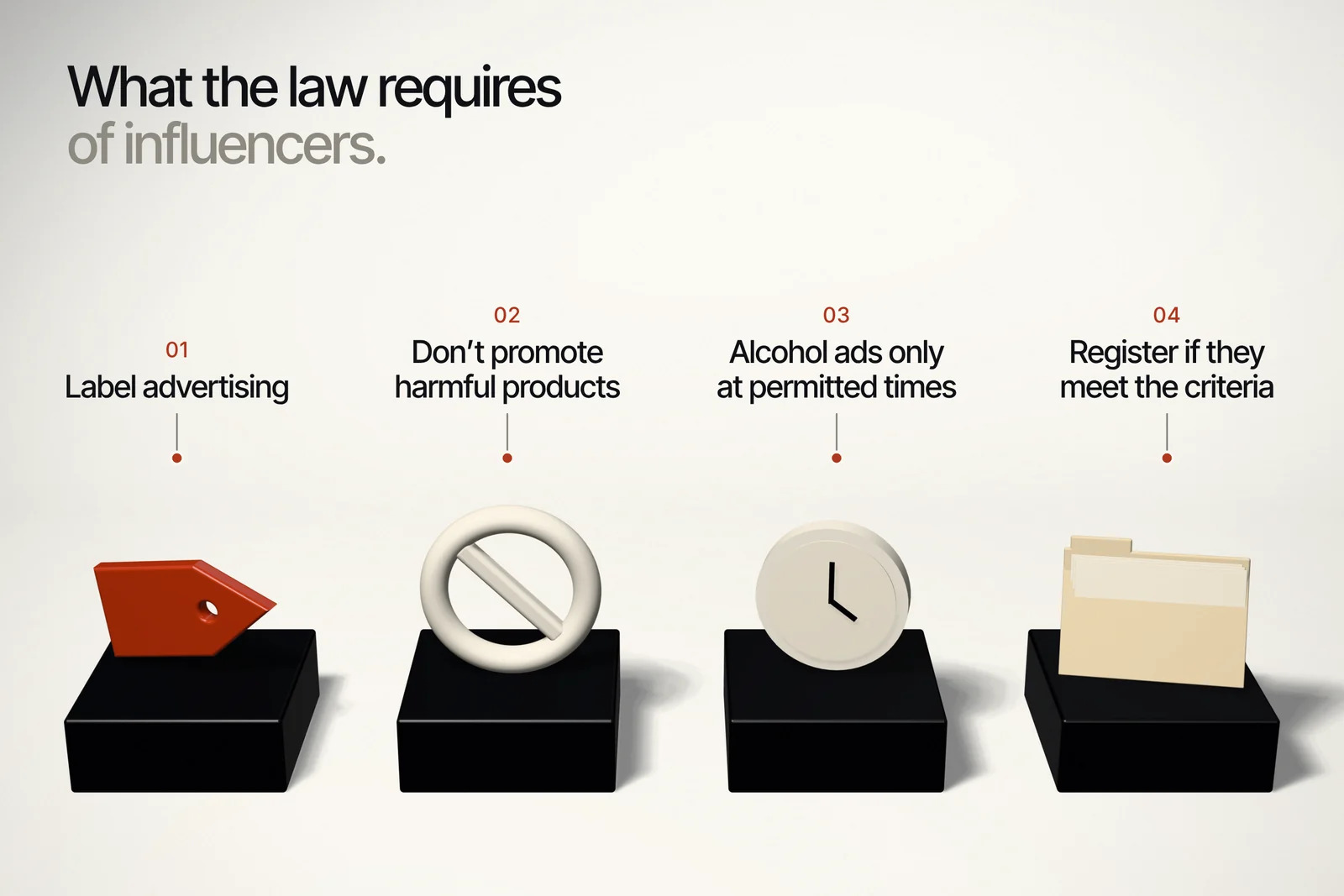
- Advertising disclosure: commercial content must be clearly identified so audiences can distinguish advertising from organic posts and consumers’ rights are protected.
- Restricted products and services: advertising involving products such as tobacco, alcohol, medicines and gambling is subject to restrictions intended to protect consumers, particularly younger audiences.
- Alcohol advertising: additional restrictions may apply to the promotion and scheduling of alcoholic beverage advertising.
- Registration: influencers who meet the applicable legal criteria may be required to register through the relevant Spanish government system, which allows greater oversight of their activity as content creators.
What Happens If You Fail to Comply?
Under the audiovisual communication framework, influencers carrying out sponsored activity through posts, Reels, videos, Stories or live broadcasts may be required to disclose that the content is advertising, using clear terms such as “advertising”, “sponsored” or “paid partnership”, as appropriate to the applicable rules. The legislation also classifies certain influencers as audiovisual media service providers, with the responsibilities associated with that status.
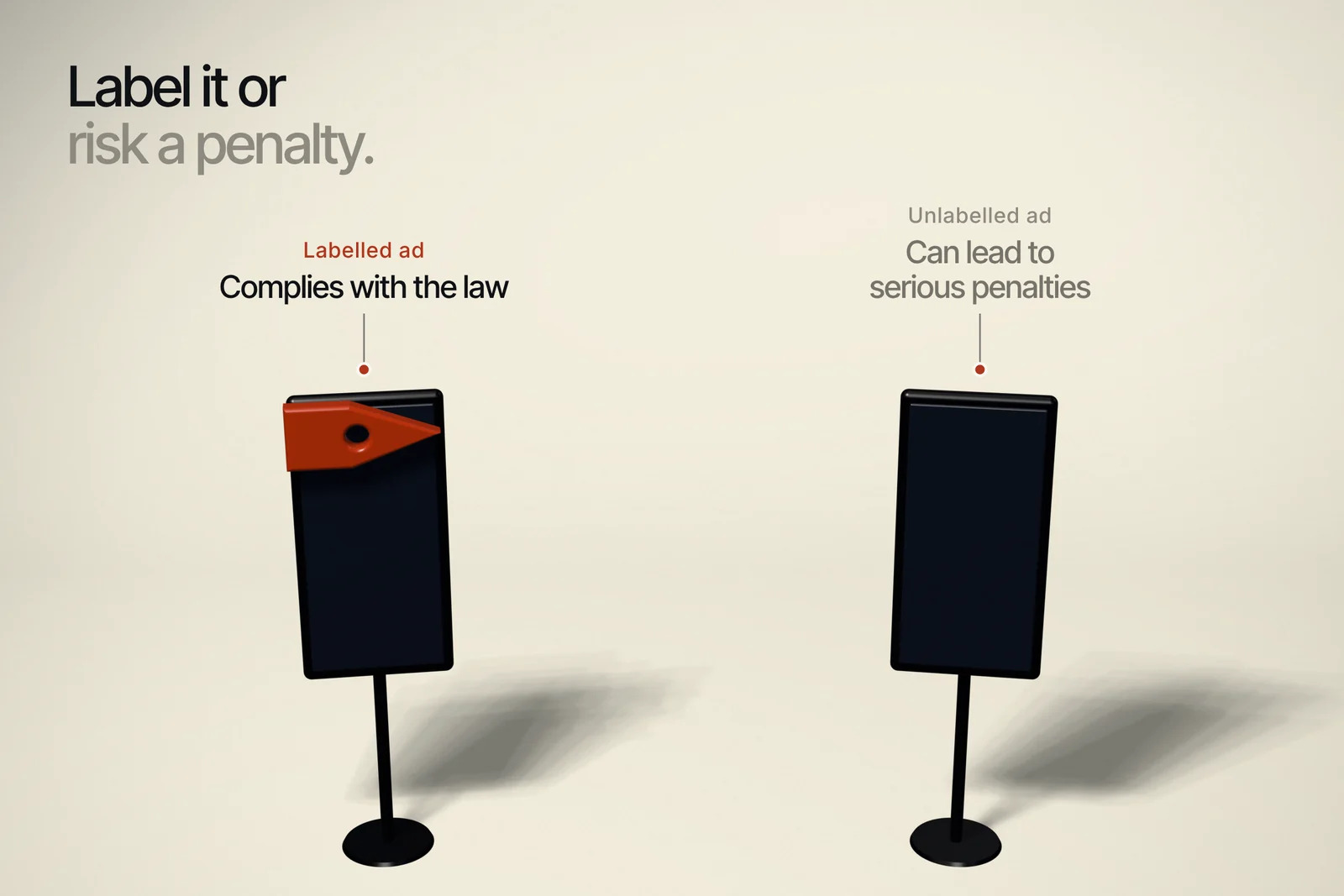
Failure to comply with the applicable legislation can result in sanctions, including fines of up to €1 million or, in the most serious cases, the withdrawal of the licence. If you’re planning an influencer marketing strategy, FlowFlamingo’s free ebook provides an introduction to developing campaigns with content creators.